Picture a woman of 38 at 9:40 p.m. on a Tuesday, standing at the kitchen counter with the dishwasher half loaded. Her 13-year-old needs a ride to volleyball at 6:15 a.m. tomorrow. The 9-year-old has a science project due Thursday that she heard about at dinner. The youngest is finally asleep. On the phone, her brother is telling her their dad fell in the garage again, off the same ladder, and he still drives at night, and one of them needs to go to the next doctor's appointment with him. Her work email has 31 unread since 6.
When she hangs up, she scrolls to a photo from college. Sophomore year, five of them on a dorm room floor at 2 a.m. with a cold pizza. She was 19, half her life ago. She had nowhere to be until 10 a.m., knees that did not hurt, and nobody who needed her for anything.
She would not trade the house for it. She would take the knees back, though, and the sleep, and one whole Saturday with nothing on it.
The poem at the end of the book
The last chapter of Ecclesiastes has a poem about growing old. Many people have heard it read at a funeral, which is a fair place for it and not where the writer put it. He wrote it for people who still have their years in front of them.
The poem is a list of the body wearing out, told in pictures of an old house (12:3 to 5), and the woman at the counter could check it against her father. "The keepers of the house tremble": his hands on the coffee cup. "The strong men are bent": his back. "Those who look through the windows are dimmed": the reason he should not be driving at night. He rises up "at the sound of a bird," at 4:30 a.m. every day. He should be "afraid also of what is high," and he is not, which is how the ladder keeps winning. "The almond tree blossoms": his hair went white years ago. "The grasshopper drags itself along."
The writer, who calls himself the Preacher, saw all of that more than 2,000 years ago, and he saw it the way she does, from a little way off, while it happens to someone else first.
Before
In the ESV the poem is one long sentence, and it starts here.
“Remember also your Creator in the days of your youth, before the evil days come and the years draw near of which you will say, 'I have no pleasure in them';”
Ecclesiastes 12:1
The word before comes three times in that sentence: "before the evil days come," "before the sun and the light and the moon and the stars are darkened," "before the silver cord is snapped." The poem is a clock set in front of the reader, and what it says is now.
The lines just ahead of it say the same thing in plain words: "Rejoice, O young man, in your youth, and let your heart cheer you in the days of your youth" (11:9). In the book, youth means the years before the poem. By that count the woman at the counter is still in them. The dorm room floor was not the last of her youth. The kitchen at 9:40 p.m. is part of it too, with the dishwasher half loaded and three kids down the hall.
Young enough
Terry Pratchett, the English novelist, put the problem in one line in his 1990 novel Moving Pictures: "Inside every old person is a young person wondering what happened."
Her father on the ladder is that young person, still sure he can clean his own gutters. So is she, at 38, looking at a photo of herself at 19. The middle of life is the one place where you can see both ends of the poem at once: the kids who have not started it, the parent who is in it, and the years in between that are yours.
Those years are heavy. There is more to carry than there was at 19, and less sleep to carry it on. The Preacher does not say otherwise. He says they are the days of your youth, and that they are for enjoying.
Remember
"Remember your Creator" can sound like a church instruction tacked onto the end of a poem. In the book it is the last word of a long argument. The Preacher has spent eleven chapters saying that the good things in a life are handed to us by God: the bread, the work, the wife you love, the days themselves (2:24; 9:7 to 9). To remember the Creator is to keep in mind who gave the days, and to use them as given, the way you use a present instead of leaving it in the box.
The full season is where the good things get filed under later. After the kids are out of the house. After the quarter closes. After Dad is settled. Nobody is going to hand her an easier season to enjoy instead; the next one simply has fewer people in the house.
At a small size, remembering is the 15 minutes in the car at 6:15 a.m., the only time the 13-year-old talks without being asked. It is the science project done at the counter on Wednesday night with the music on. It is asking her father to tell the hailstorm story one more time. At a larger size it is the trip with the kids and her parents together, taken this year, while he can still walk the trail.
Sunday dinner
The poem ends where every life ends, with the dust returning to the earth (12:7). The writer does not soften that.
That Sunday her parents come for dinner. There are seven people and one leaf too few in the table, so the 9-year-old eats on a stool. Her father tells the hailstorm story, and the 9-year-old mouths the last line along with him, and the whole table laughs, her father loudest.
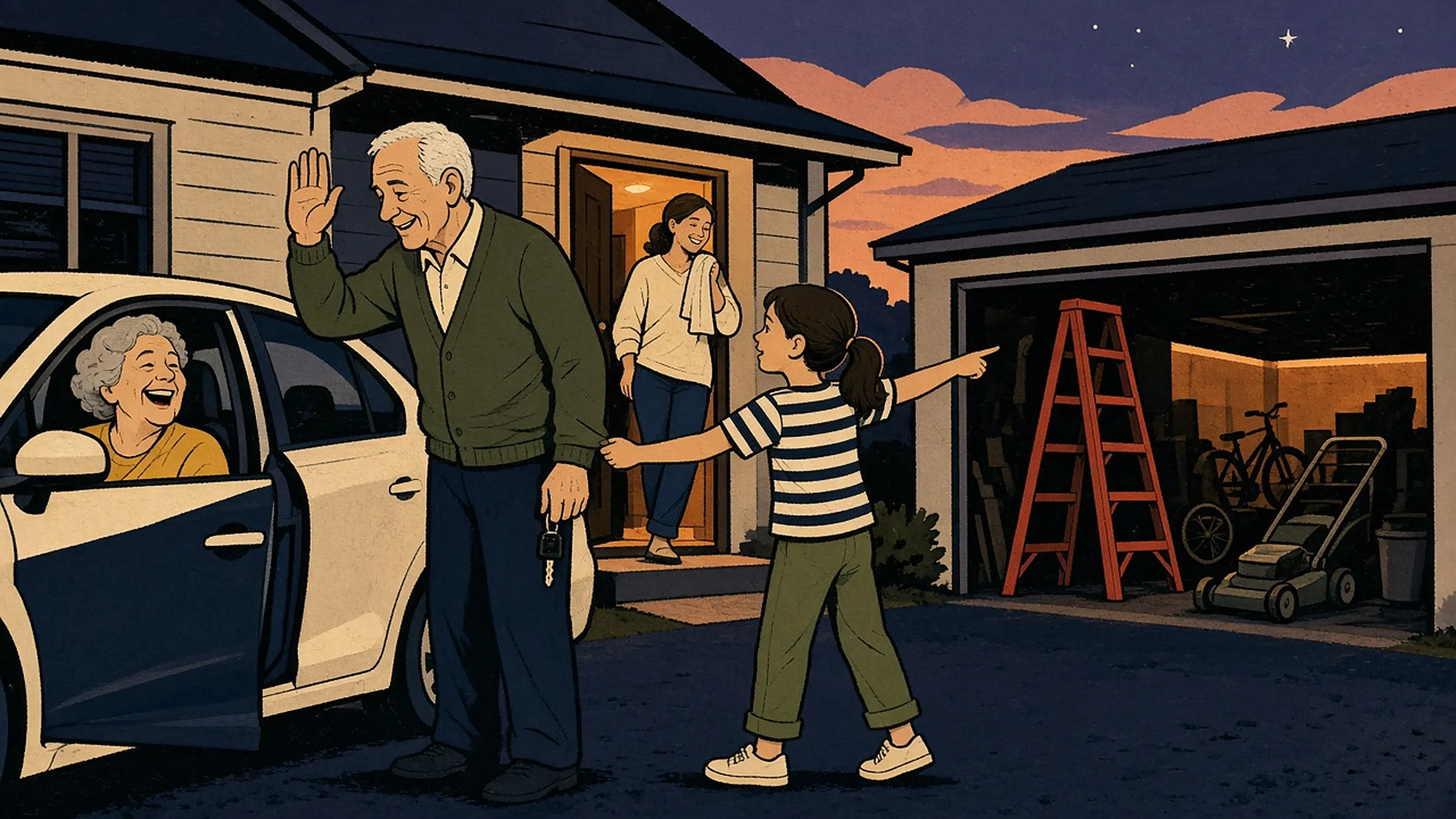
At the end of the night the 9-year-old walks her grandfather out to the car and makes him promise to stay off the ladder. He promises, and nobody at the table believes him.