Picture a man at his 30th high school reunion. It is in the back room of a steakhouse off the interstate, the name tags carry everyone's senior photo, and he spends the first hour telling people what he does for a living. Around 9 he ends up at the bar with three guys he has not seen together since graduation. Somebody says it, and it turns out to be him: those were the best years of our lives.
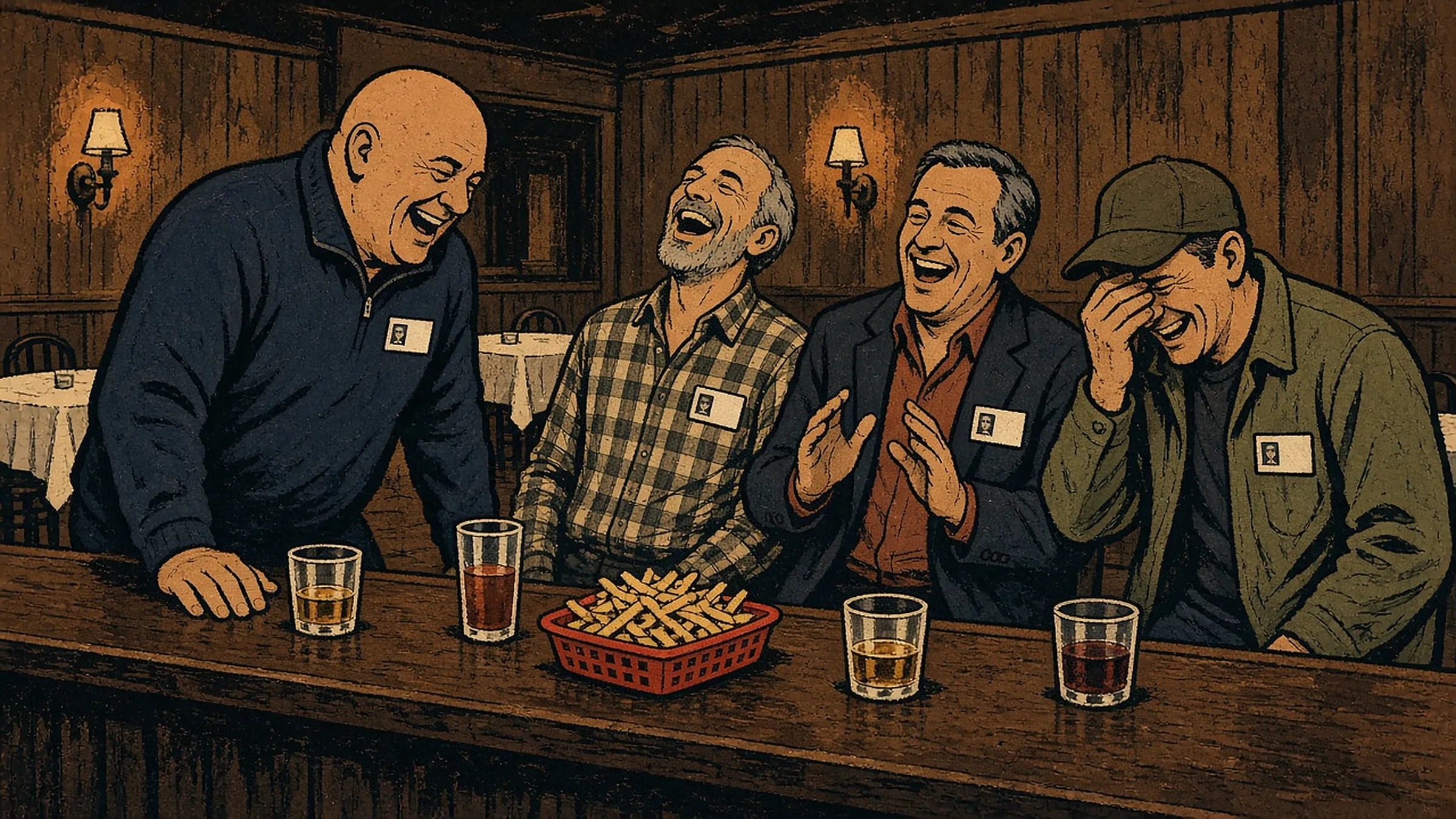
Then the four of them start proving it. Friday nights on the tailgate of Danny's pickup at the edge of the practice field. Whataburger at midnight, splitting two orders of fries because nobody had any money. The summer they painted houses for a man who paid them in cash and pizza. The night they drove 2 hours to a football game none of them cared about and got home at 4 a.m.
Listen to what he is describing. Nobody in any of those stories has a job title. Nobody is checking a phone. Nobody has to be anywhere until curfew. It is four people who know everything about each other, with a lot of time and almost nothing to protect. 17 was only the age he happened to be.
The best years
Almost everyone past 40 has been in some version of that conversation, at a reunion or a wedding or a funeral, or alone in the car when the old street comes up. Memory researchers have a name for the pull, the reminiscence bump: people remember more, and more vividly, from their late teens and 20s than from any other stretch of life. Those years were full of firsts, and firsts stick.
So the old days come back edited. The man at the bar remembers the tailgate and forgets the chemistry grade, the fight with his dad about the car, the Sunday nights he dreaded Monday. He is setting that highlight reel next to a Tuesday he is living with nothing cut out.
Some of the people from those years are gone. Nothing here brings them back, and nothing here asks you to stop missing them.
The former days
The writer of Ecclesiastes, who calls himself the Preacher, has one sentence on this.
“Say not, 'Why were the former days better than these?' For it is not from wisdom that you ask this.”
Ecclesiastes 7:10
The man who wrote it had more old days to miss than most. By his own account in chapter two, he built houses, planted vineyards, made pools to water his trees and kept from himself nothing his eyes wanted. He knew what the good years looked like from the inside.
It sounds like a scolding, and it is closer to a practical warning. The question cannot be answered, because it compares a memory with a day, and the day loses every time. It also costs something. An evening spent asking it is an evening spent away from the only days that can still be lived.
A present of things past
Augustine, writing in North Africa around the year 400, got stuck on a question most of us never ask: where is the past? You cannot go there. His answer, in the eleventh book of his Confessions, was that the past exists only inside the present, as memory: "present of things past, memory; present of things present, sight; present of things future, expectation."
That changes what happened at the bar. When the four of them laughed about the pickup, they were not back in high school. They were in the back room of a steakhouse, 30 years older, laughing together, that night. The best thing about the old days was happening again, in the present tense, with the same people, over a sticky bar top.
What they missed was each other, and time nobody was counting.
Almost nothing to protect
If the old days were mostly people and time, the next question is why they are so hard to get back, since most of the people are still around and every week still has evenings in it.
Part of it is the calendar. At 17 the week had empty stretches nobody had claimed. Now every evening is spoken for before it arrives, and an open one feels like a mistake to fix.
Part of it is the job title. The man at the bar spent his first hour on what he does for a living, because that is how grown men say hello. On the tailgate nobody cared what anyone did, and he was free to be loud, to be bad at things, to be wrong about everything in front of people who would still be there on Monday.
And part of it is that there is more to lose now: a reputation, a marriage, a company, a certain way of being seen. People with something to protect get careful, and careful people do not sit on tailgates. They schedule lunch 6 weeks out and then move it.
That is what happens to anyone who builds a life. It also means the old days will not come back on their own. Someone has to put them on the calendar.
The first Thursday
Most of what made those years good is still available on an ordinary week, in a smaller size. The friends are busier and farther away. The time is shorter. Nobody is going to sit on a tailgate until 1 a.m. But breakfast before work with one person who knew you at 17 is the same thing, cut down to fit. So is a standing dinner with the couple next door, or a game of cards after the kids are asleep.
The first invitation is the awkward one. Somebody has to send the text that says breakfast Thursday, knowing it might get a thumbs-up and nothing else. Friendships at this age are built by the person who asks first, and then asks again.
At a larger size it is the trip four old friends take every year instead of talking about it, or the house that is open every Friday for whoever shows up.
The people at your table this year are the ones you will miss in 20.
Before they leave the parking lot, somebody says it: we should do this more than once every 10 years. Everyone agrees, the way people agree at reunions. The man takes out his phone and puts the first Thursday of next month on four calendars: breakfast at 7 a.m., the Whataburger by the old school.
Then he drives home.