The week is done and the evening is open. The phone holds nine hundred contacts, and there is nobody in it you would text the word dinner to without a reason attached. The evening is quiet. Nothing is wrong, exactly. This is the loneliness inside a full life, and the people most prone to it are the ones whose calendars look the least empty. It happens to the person whose work made them important to a great many people and close to almost none. The roomful of colleagues is not the table.
Most people who say they do not have time for a table are not short of meals. They are short of meals with other people that bring real joy. Twenty minutes at a table where everyone is all there is a feast. Two hours at a table where you are somewhere else is a meeting with food.
“Go, eat your bread with joy, and drink your wine with a merry heart, for God has already approved what you do.”
Ecclesiastes 9:7
The Preacher does not say find a table. He says go and eat. The handful of people you can text about dinner is built slowly, and the building is duller than the word hospitality suggests.
Pick a time and keep it: dinner with friends on the same night each week, Saturday breakfast with the kids. Keep the menu beneath your ambitions, soup in winter, burgers in summer, so that the cooking never becomes a reason to cancel. Invite the two or three you want at the core, and let them bring who they bring. Expect the first attempts to be slightly awkward. The conversation will run out once or twice. Somebody will leave early. Hold the night anyway.
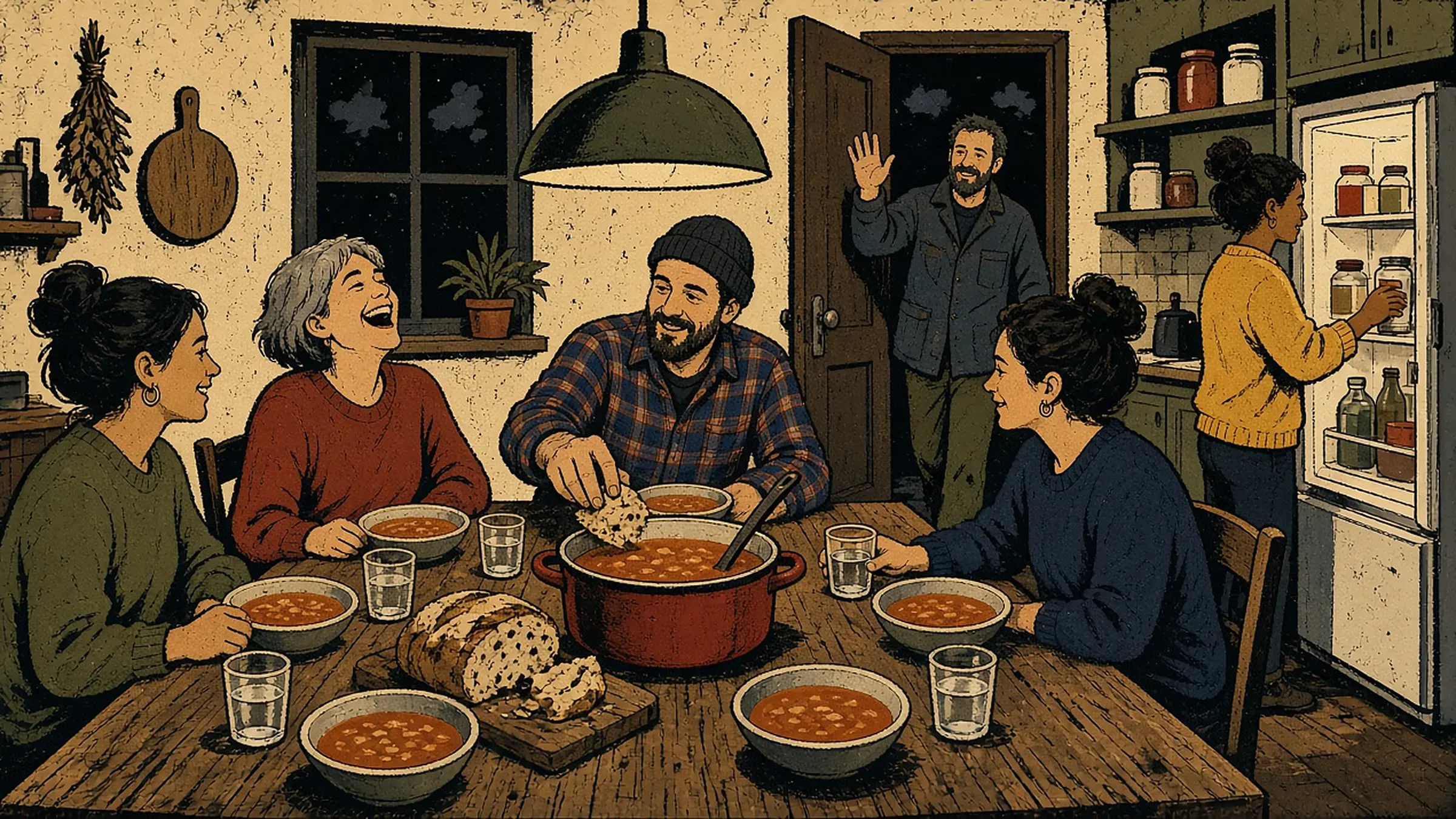
By the eighth or ninth week something shifts. The guests stop being guests. They walk in without knocking and open the refrigerator, and the house has become one of the places their life happens. The table is built by being the one who reaches out first, again, after the last time was not returned. It is built by the awkward second invitation when the first was declined. It is built by showing up at the dull thing, the waiting room, the move, so that you are already someone in the room when the better days come.
None of this is efficient. What the table gives back is a place where you do not have to be the version of yourself the work requires. People who knew you before the title and will know you after it. A standing invitation that does not depend on how the quarter went.
Every feast is a protest against despair. The world is hard, and you sit down at a table anyway. You light the candles anyway. Then the evening ends, and you have somewhere to be next week.