Picture a man who, at 25, wrote three lines on an index card and kept it in his wallet. Get up early. Tell the truth. Take care of your people. Then he did what the card said. He paid his bills, told the truth in meetings where it cost him, and coached his kids' teams. For about 20 years it worked the way the card said it would. The business grew. The kids turned out kind.
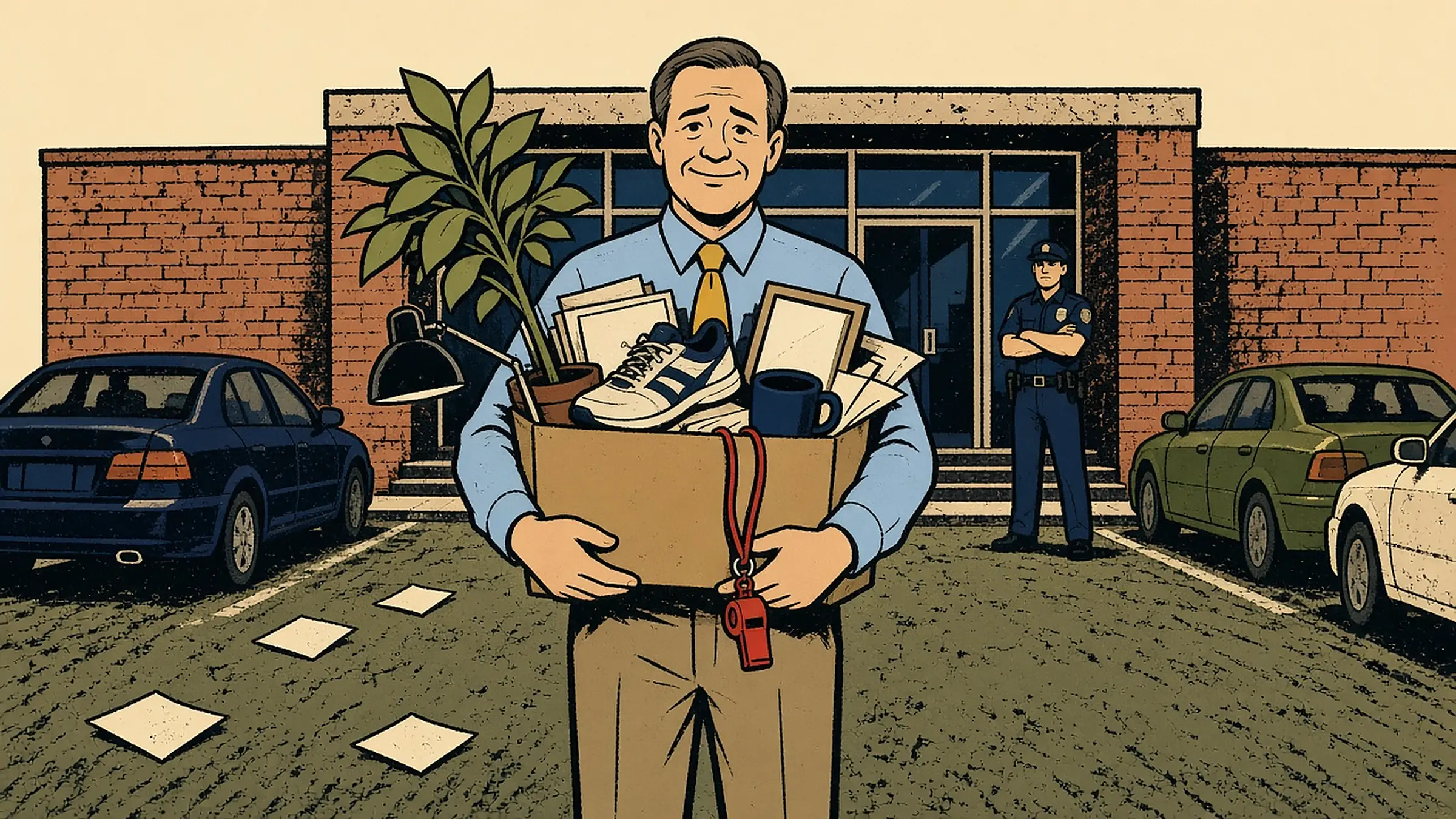
At 52 he is standing in the parking lot of a company he helped build, holding a box of the things from his desk, because the new owners have brought their own people. Nothing on the card was wrong. The card just does not say anything about the parking lot.
The formula you were raised on
Most people were raised on some version of that card. Work hard, be honest, treat people well, and it will go well for you. A parent said it, or a coach, or a first boss. It is mostly true. Anyone who has run a household or a payroll has watched it come true more often than not.
The trouble starts when the formula is read as a promise. Advice about how life usually goes turns, without anyone deciding it, into a contract: I kept my end, so the outcome is owed to me. Then the outcome does not come, and the man in the parking lot does what most careful people do. He goes back over the card, looking for the line he broke. He decides the failure must be his.
What the Preacher saw
There is a book in the Bible written by a man who tried everything a careful person can try, and then wrote down where the formula did not hold. He calls himself the Preacher, and the book is Ecclesiastes.
"There is a righteous man who perishes in his righteousness, and there is a wicked man who prolongs his life in his evildoing" (Ecclesiastes 7:15). "The race is not to the swift, nor the battle to the strong, nor bread to the wise, nor riches to the intelligent, nor favor to those with knowledge, but time and chance happen to them all" (9:11).
He is not saying the habits on the card are useless. The same writer says, "Whatever your hand finds to do, do it with your might" (9:10). What he will not do is pretend that good work puts the outcome in your hands. Time and chance happen to the diligent too.
A way of life, not a formula
Most of what gets sold as wisdom is sold as a formula. Follow the steps and it will come out like the picture in the cookbook. Get rich in 12 months. Get fit in 90 days. The seminar, the program, the morning routine of someone who made a fortune: each one shows you the finished dish and implies that if yours does not look like it, you skipped a step. Some of the steps are good ones. The promise on the cover is the part that is not true.
The Preacher had tried the formulas himself, the houses and vineyards and silver and gold (2:4 to 11), and he tells you where each one stopped working. What he offers instead is a way of life for a world where nothing is guaranteed: how to work, eat, love, give and be glad without being owed the outcome. That is all this site offers. Nothing here promises the picture on the cover.
Both are true
The card tells you how to build. It cannot tell you what you are owed. The Preacher puts both halves in one verse.
“In the day of prosperity be joyful, and in the day of adversity consider: God has made the one as well as the other, so that man may not find out anything that will be after him.”
Ecclesiastes 7:14
The last part of that verse is the hard one for people who plan for a living. Careful people keep negotiating for a guarantee: follow the steps carefully enough, for long enough, and the good outcome will have to come. It does not have to. The man in the parking lot was never owed the last 20 years. They were given to him, and he did well with them.
What is still his
The Preacher does not stop at the bad news. Five times in his book he stops and says what is left when the outcome is out of your hands: bread, wine, the work in front of you, the person you love, and the choice to be glad (2:24; 3:12; 3:22; 8:15; 9:7 to 10). None of it depends on how the quarter went. All of it was already there before the parking lot, and all of it is still there after.
Receive life as gift, not guarantee. The card still works as a way to build. It was never going to work as a way to be safe.
He put the box in the back seat, put the card back in his wallet, and drove home for dinner.